
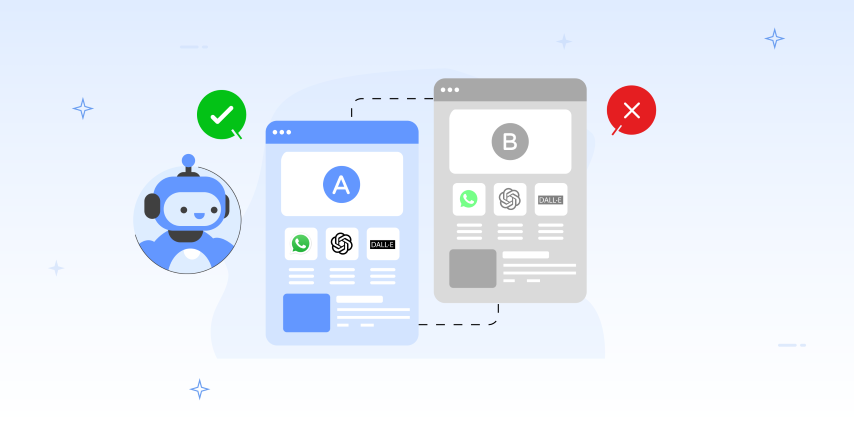
A quick search for “ChatGPT” or “DALL·E” on a mobile app store today reveals dozens of lookalikes. Each promises “AI chat,” “image generation,” or “smart assistance.” Yet beneath these polished logos lies a troubling truth — not all clones are created equal.
Some are harmless wrappers that simply connect to genuine APIs. Others are opportunistic adware disguised as AI tools. And a few conceal sophisticated spyware, capable of stealing data and surveilling users.
Appknox’s security research team recently analyzed multiple AI-themed apps and found that brand trust has become the newest attack vector.
While some apps legitimately leverage AI APIs, others weaponize familiar branding to compromise users. Understanding this spectrum of clones — and the threat they pose — is essential for enterprises, especially as mobile AI adoption accelerates.
Key takeaways
|
Key insight 
ADVERTISEMENT |
What it means for you |
|
1. Not all clones are malicious. |
Some are unofficial wrappers that connect to genuine APIs but can still pose privacy risks. |
|
2. Brand impersonation is rising. |
Attackers exploit trust in AI brands to push adware or malware. |
|
3. The threat spectrum is wide. |
From harmless wrappers to full-blown spyware, clones vary drastically in intent. |
|
4. Traditional app vetting isn’t enough. |
Static checks miss evolving post-launch threats. Continuous monitoring is vital. |
|
5. Appknox enables proactive defense. |
Automated vulnerability assessments and app store monitoring stop threats early. |
The rise of AI clones and why they matter
The global AI boom has created a gold rush in app development — and attackers are cashing in.
According to SensorTower’s 2025 State of Mobile Report, in 2024, AI-related mobile apps collectively accounted for 17 billion downloads, representing about 13% of all global app downloads that year. Opportunistic developers are cloning interfaces of ChatGPT, DALL·E, and other AI tools to attract unsuspecting users.
But imitation today comes in shades. Some clones merely wrap existing APIs; others abuse branding for profit. The most dangerous mimicry hides advanced spyware under familiar names.
Expert opinion
Abhinav Vasisth, Head of Security, Appknox, feels that
“The line between imitation and exploitation is vanishing fast.”
As enterprises adopt AI-driven apps and tools, cloned applications don’t just threaten consumers, they threaten brands, compliance posture, and enterprise data pipelines.
Case study #1: DALL·E clone — Ads in disguise
The app “DALL·E 3 AI Image Generator”, hosted on Aptoide, presents itself as an OpenAI product and promises AI-powered image generation, but contains no AI capability whatsoever..
Instead, the app connects exclusively to advertising and analytics services — Adjust, AppsFlyer, Unity Ads, and Bigo Ads — funneling user data for monetization.
Technical summary
|
Indicator |
Observation |
|
Package Name |
com.openai.dalle3umagic |
|
Developer |
Apero Group (template app publisher) |
|
Network Calls |
Advertising and analytics domains only |
|
True Function |
Ad traffic generation |
|
Risk Level |
Medium (deceptive, not directly malicious) |
How the DALL·E clone exploits AI branding for ad revenue
The deception begins the moment the user opens the app. A loading screen mimics an AI model generating an image, but the app’s activity logs show network calls only to ad servers. No content is generated—just marketing traffic disguised as intelligence.
Its package name (com.openai.dalle3umagic), logo, and UI were crafted to suggest authenticity, and embedded Gmail addresses and API keys confirm it was hastily assembled from a template.
“It’s not malware in the strict sense,” said Abhinav Vasisth, Lead Security Researcher at Appknox. “But it’s a commercial parasite that profits from deception. It sells ad impressions, not intelligence.”
This pattern matches broader industry findings. ESET’s Threat Report H1 2024 similarly warned that “AI-branded apps have become the new front for adware monetization,” noting a surge in impersonator listings across secondary app stores.
Case study #2: WhatsApp Plus — Malware under the mask
If the fake DALL·E app represents digital opportunism, WhatsApp Plus is outright weaponisation. Disguised as an upgraded version of Meta’s messenger, it conceals a full malware framework capable of surveillance, credential theft, and persistent background execution.
Signed with a fake certificate (CN=bwugtq, O=twzqicusmq, C=DE) rather than WhatsApp Inc.’s legitimate key, the app uses the Ijiami packer, a tool commonly employed by malware authors to encrypt its code. A folder named secondary-program-dex-jars hides additional executables that are decrypted and loaded after installation, a hallmark of a trojan loader.
Technical breakdown
|
Feature |
Description |
|
Certificate |
Fraudulent (non-Meta) |
|
Packer |
Ijiami (malware obfuscator) |
|
Hidden Code |
Decrypted after install |
|
Malware Type |
Trojan/Spyware |
|
Permissions |
SMS, Contacts, Call logs, Accounts |
|
Communication |
Domain fronting (AWS, Google Cloud) |
|
Threat Level |
Critical |
Inside WhatsApp Plus: Permission abuse and covert data exfiltration
Once active, the malware silently requests extensive permissions: reading and writing contacts, accessing SMS and call logs, retrieving device accounts, and sending text messages. These privileges allow it to intercept one-time passwords, scrape address books, and even impersonate the victim in chats. Embedded native libraries such as libijm-emulator.so keep the hidden code running in the background long after the app is closed.
Captured network logs confirm that the malware communicates via domain fronting, masking traffic behind legitimate Amazon Web Services and Google Cloud endpoints. This technique, previously seen in spyware families like Triout and AndroRAT, allows attackers to exfiltrate data under the guise of normal app communication.
Security databases, including VirusTotal and MalwareBazaar, confirm detections for this APK, classifying it as Trojan/Spyware. Its obfuscation and persistence make WhatsApp Plus one of the most dangerous clones identified to date.
Expert opinion
“WhatsApp Plus isn’t just a clone, it’s spyware disguised as a chat app,” says Jeel Patel, Associate Security Analyst at Appknox. “Banking and messaging trojans continue to evolve by hiding behind trusted brands and permissions users barely glance at.”
Business relevance
The threat goes beyond privacy. With SMS and account access, the malware can intercept banking verification codes or register new accounts using the victim’s identity. In short, it doesn’t just steal data; it steals digital presence.
Malicious clones like WhatsApp Plus can hijack enterprise devices, steal multi-factor authentication codes, and infiltrate corporate accounts. In regulated sectors like finance and healthcare, such breaches can result in violations of GDPR, HIPAA, and PCI-DSS and multimillion-dollar fines.
Case study #3: ChatGPT Wrapper — Not fake, just unofficial
Not every imitation is malicious.
The ChatGPT Wrapper app analyzed by Appknox openly identifies itself as an unofficial interface for OpenAI’s API. Code and network analysis confirmed that it connects directly to api.openai.com to perform genuine chat requests. The app includes analytics and ad libraries but no hidden payloads, obfuscation, or unauthorized data exfiltration.
In other words, it sits in the grey zone between legitimate utility and brand reuse. It’s an unofficial utility — not endorsed by OpenAI, but not deceptive either.
|
Parameter |
Finding |
|
Functionality |
Uses genuine ChatGPT API |
|
Branding |
Transparent (unofficial) |
|
Risk |
Low |
|
Concern |
Privacy + brand confusion |
The takeaway? Cloning is not always criminal, but impersonation without transparency is a security concern. Users (and enterprises) often cannot tell the difference.
The spectrum of clones: From convenience to compromise
Together, the analysed apps illustrate a spectrum of imitation.
At one end are wrappers, legitimate but unofficial tools that connect to real services. In the middle are impersonators like the DALL·E clone, which exploits branding for advertising revenue. At the far end are malware variants like WhatsApp Plus, which hijack devices and steal user data.
“A DALL·E clone wastes your data,” said Abhinav. “A fake WhatsApp steals it.”
App clones and their threat levels
|
Type |
Description |
Threat level |
Example |
|
Official app |
Signed by a legitimate publisher; verified store listing |
Safe |
ChatGPT (OpenAI) |
|
Unofficial wrapper |
Uses real APIs; not endorsed |
Low |
ChatGPT Wrapper |
|
Brand impersonator |
Exploits logos for ad revenue |
Medium |
DALL·E Clone |
|
Malware clone |
Embeds Trojan code; exfiltrates data |
Critical |
WhatsApp Plus |
This gradient of risk is precisely what makes detection difficult. Users often assume all non-official apps are equally bad or equally safe. The truth, as researchers found, is far more complex: while some clones are opportunistic, others are outright invasive.
Security filters may flag none of these apps as outright malware, yet two-thirds can compromise users or brand integrity.
The real cost of clone infiltration for enterprises
Cloned or impersonated apps harm more than end-users — they erode brand equity and inflate risk costs.
|
Business impact |
Description |
Estimated cost |
|
Brand damage |
Users lose trust after fake app incidents |
30% customers stop buying after a major breach (Exploding topics, 2025) |
|
Data breach |
Clones steal credentials or PII |
Avg. $4.45M per breach (IBM, 2023) |
|
Compliance risk |
Breaches violate GDPR, PCI, etc. |
Up to 4% of global turnover |
|
Response delay |
Manual detection of clones |
60–70% slower remediation |
|
PR fallout |
Legal + reputational recovery |
High operational burden |
These numbers make one thing clear: post-launch security monitoring is no longer optional. Enterprises must track how their apps — and their impostors — appear across stores.
How Appknox helps secure your entire mobile app ecosystem
Your security shouldn’t stop at deployment.
Appknox gives you continuous visibility and control over every version, clone, and copy of your app, anywhere in the world.
How Appknox bridges the gap between speed and security
|
Feature |
How it helps you |
|
App store monitoring |
Instantly detects fake, orphaned, or tampered apps across global app stores before they harm your users. |
|
Automated vulnerability assessment |
Continuously scans your mobile apps — both official and cloned — to uncover hidden risks early. |
|
Real-time dashboards |
Gives development, security, and compliance teams a unified, real-time view of your app’s security posture. |
|
Integrated ticketing |
Syncs findings directly into developer tools like Jira or GitHub, so fixes happen faster — without the back-and-forth. |
|
Contextual fix guidance |
Empowers developers with clear, actionable remediation steps, cutting resolution time and guesswork. |
“You can’t control every app store, but you can control your visibility across them.”
— Appknox Security Research Team
With Appknox, you get a single, trusted platform to protect your app from code to cloud — and beyond launch.
Detect threats, close gaps, and keep your users’ trust intact while your teams move at DevOps speed.
Suggested read: The Need for Continuous App Store Monitoring
Best practices to prevent brand abuse and malicious clones
- Enable continuous app store monitoring to detect impostor listings in real time.
- Verify app certificates and ensure signing keys are rotated securely.
- Automate vulnerability scans across your app ecosystem, including APIs and SDKs.
- Educate users to download only from official stores and verify publisher details.
- Establish a response protocol for reporting and taking down fake apps quickly.
Pro tip
Combine Appknox’s automated VA with brand protection workflows to maintain control even after deployment.
The bigger picture
The flood of cloned applications reflects a deeper problem: brand trust has become a vector for exploitation. As AI and messaging tools dominate the digital landscape, bad actors are learning that mimicking credibility is often more profitable than building new malware from scratch.
Some clones, like ChatGPT Wrapper, exist in the open. Others, like the DALL·E impersonator, blur the line on legality through advertising deception. And some, like WhatsApp Plus, weaponise familiarity into surveillance.
“The clones aren’t getting smarter,” said a leading threat Analyst at Appknox, referencing trends noted in Avast’s Threat Report (Dark Reading, July 2024). “They’re getting sneakier, blending convenience with compromise. And for users chasing the next big AI app, that mix is dangerously easy to download.”
As unofficial markets continue to grow, the next frontier of cybersecurity may not be about new malware families, but about old names reused in new, deceptive ways.
For enterprises, the takeaway is clear: you can’t afford to rely solely on pre-launch security. Continuous app store monitoring and automated vulnerability assessment are now strategic imperatives.
Every day your app goes unmonitored, clones and threats evolve. Stay ahead of them.
Try Appknox for free and safeguard your mobile ecosystem with real-time visibility and continuous security.
See Appknox in action now!
Frequently asked questions (FAQs)
-
How do AI app clones exploit user trust?
AI app clones mimic well-known brands like ChatGPT or WhatsApp, tricking users into downloading adware or spyware.
-
What’s the difference between a wrapper and a fake app?
Wrappers use legitimate APIs transparently, whereas fake apps disguise themselves to mislead or harm users.
-
How can enterprises detect cloned apps?
Enterprises detect cloned apps through automated App Store Monitoring tools that scan marketplaces for fake listings.
-
Why are clones more dangerous post-launch?
App clones are more dangerous post-launch, as app visibility drops after release, and fake versions can spread undetected for months.
-
How does Appknox help detect app clones and fake apps?
Appknox helps detect fake apps and app clones by combining automated VA, continuous monitoring, and real-time remediation guidance for faster response.