

Have you ever faced lagging Wi-Fi, unstable connections, or security issues while working online? For cybersecurity professionals and business leaders alike, those small lags can mean productivity loss or even data risk. The solution? A solid Ethernet connection.
Knowing how to connect Ethernet properly isn’t just for network technicians — it’s an essential skill for anyone who values speed, stability, and safety in their digital environment. In this guide, we’ll break down everything you need to know — from choosing the right cable to securing your wired network.
Why Wired Ethernet Still Matters in a Wireless World
In an age where Wi-Fi dominates offices and homes, you might think Ethernet is outdated. But in reality, Ethernet remains the gold standard for performance, consistency, and security.
Let’s break down why connecting via Ethernet still matters — especially in cybersecurity and enterprise settings:
1. Security Superiority
Wi-Fi signals can be intercepted or jammed. Wired Ethernet connections, on the other hand, require physical access — drastically reducing the risk of cyber intrusions. For organizations handling sensitive data, this is critical.
2. Stable and Predictable Performance
Ethernet offers dedicated bandwidth and minimal interference. You won’t suffer from signal drops or slowdowns when too many devices connect — making it ideal for servers, workstations, and data centers.
3. Low Latency for Real-Time Work
From video conferencing to financial transactions or threat monitoring systems, Ethernet provides millisecond-level latency — crucial for time-sensitive operations.

4. Control and Visibility
In cybersecurity operations, visibility matters. Wired connections can be logged, tracked, and managed at the switch level, providing better control and compliance.
Understanding the Basics Before You Connect Ethernet
Before we dive into the steps, let’s cover some key components involved in setting up a secure Ethernet connection.
1. Ethernet Cable Types
Not all cables are created equal. Here’s what you should know:
| Cable Type | Speed Capacity | Ideal Use Case |
|---|---|---|
| Cat5e | Up to 1 Gbps | Basic home/office connections |
| Cat6 | Up to 10 Gbps | Modern offices, low interference |
| Cat6a | Up to 10 Gbps (longer distances) | Business-grade performance |
| Cat7/Cat8 | 25–40 Gbps | Data centers, high-security environments |
Tip: For future-proofing, always go for Cat6 or higher — it balances speed and cost efficiently.
2. Ethernet Ports
Most laptops and PCs have RJ-45 ports for Ethernet. For slim ultrabooks, you might need a USB-to-Ethernet adapter.
Servers and routers have multiple Ethernet ports for network segmentation and redundancy.
3. Network Devices
To connect Ethernet properly, you’ll typically need:
-
Modem: Connects to your ISP (internet source).
-
Router: Distributes internet to multiple devices.
-
Switch: Expands the number of Ethernet ports in large networks.
How to Connect Ethernet: Step-by-Step Guide
Here’s your detailed roadmap for setting up Ethernet like a pro — whether it’s a home office or enterprise-grade infrastructure.
Step 1: Plan and Prepare Your Setup
Before plugging in any cable, do a quick assessment.
-
Identify your device ports: Check if your PC, laptop, or server supports Ethernet.
-
Check network hardware: Confirm that your router or switch has available LAN ports.
-
Measure cable length: Keep runs under 100 meters (328 ft) to avoid signal loss.
-
Avoid interference: Don’t route cables near electrical wiring, fluorescent lighting, or heavy machinery.
Tip: Label both ends of your cables. This small step saves huge time during troubleshooting.
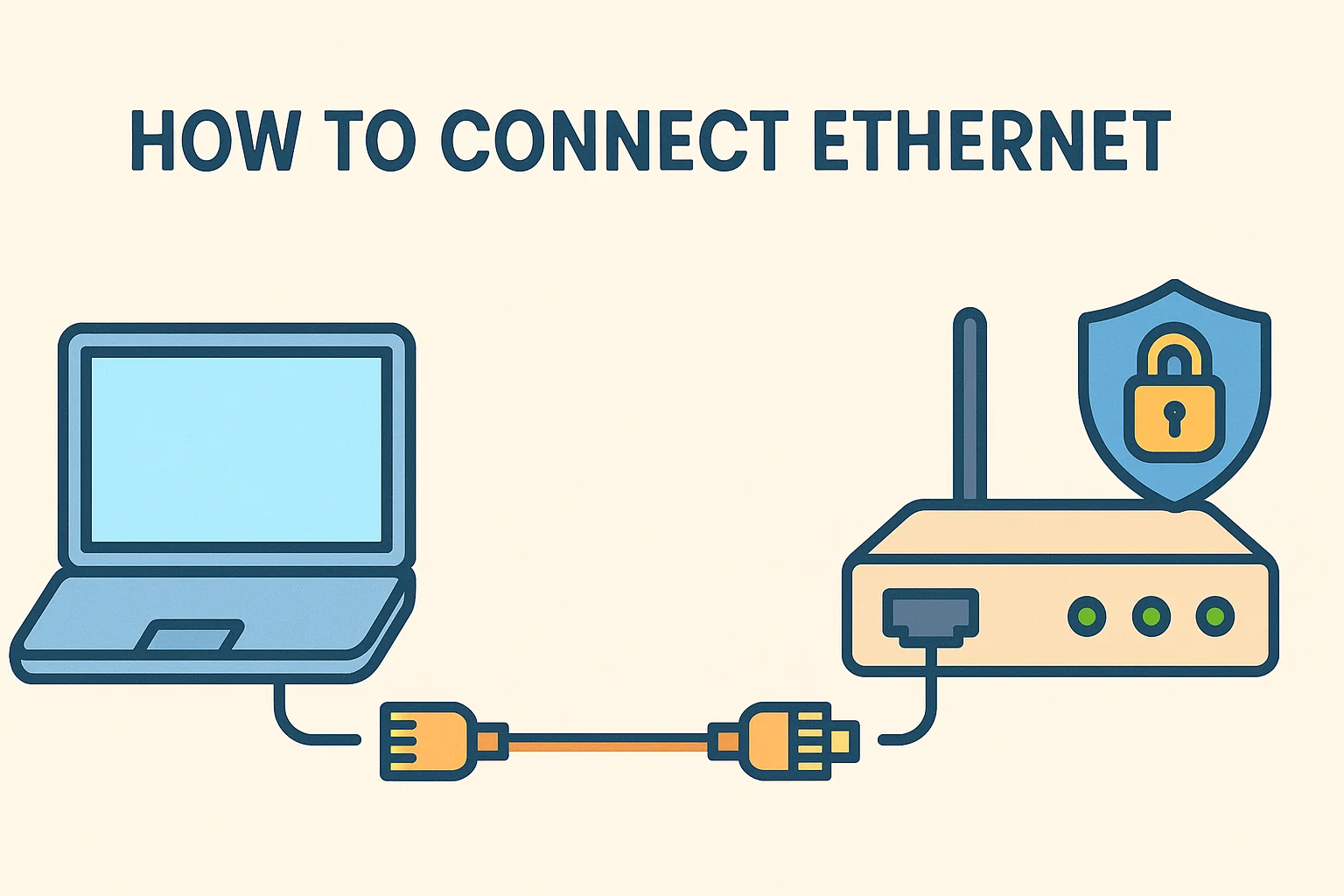
Step 2: Connect the Ethernet Cable
Now, the physical setup.
-
Plug one end of the Ethernet cable into your device’s Ethernet port.
-
Insert the other end into an available LAN port on your router, switch, or wall jack.
-
Check for indicator lights:
For larger environments: Use structured cabling through patch panels and switches. This ensures durability and scalability.
Step 3: Configure Network Settings
Once connected, it’s time to ensure the software side matches the hardware.
For Windows:
-
Go to Settings → Network & Internet → Ethernet.
-
Check if the connection says Connected.
-
Select Properties to confirm IP configuration (usually set to Automatic/DHCP).
-
If using static IPs, enter them manually.
For macOS:
-
Open System Preferences → Network → Ethernet.
-
Verify connection status and configure IP (Automatic or Manual).
For Linux:
Use the terminal:
If Ethernet shows as “connected,” you’re good to go.
Cybersecurity Note:
Always verify DNS settings — prefer using secure DNS servers like Cloudflare (1.1.1.1) or Google DNS (8.8.8.8) to prevent spoofing attacks.
Step 4: Test and Verify the Connection
Testing ensures performance and reliability. Here’s how:
1. Basic Connectivity Test
Run a ping test:
If replies come back with low latency, your Ethernet is working.
2. Check Internet Speed
Use tools like:
Compare results with your ISP’s promised speeds. Ethernet should deliver close to full bandwidth.
3. Check IP and Gateway
Run:
Verify your device has the correct IP address and default gateway.
4. Inspect Physical Link
If there’s no connection:
How to Connect Ethernet Securely (for Professionals)
For cybersecurity teams and IT managers, Ethernet connection isn’t just about performance — it’s about protection.
1. Segment Your Network
Use VLANs (Virtual LANs) to isolate sensitive systems. Example:
This minimizes internal attack surfaces.
2. Disable Unused Ports
Every open Ethernet port is a potential access point. Disable unused ports on switches or routers to prevent unauthorized access.
3. Implement MAC Address Filtering
Restrict network access by allowing only approved device MAC addresses. It’s a simple yet effective layer of control.
4. Enable Port Security
Enterprise switches (like Cisco or Juniper) allow you to limit the number of devices per port or shut down suspicious activity automatically.
5. Monitor and Log Everything
Integrate Ethernet connections into your SIEM (Security Information and Event Management) system. Track anomalies, unauthorized devices, or data spikes.
Choosing the Right Ethernet Equipment
Professionals should always match their hardware choices to their network goals.
Routers
-
Small Offices: TP-Link Archer, ASUS RT series
-
Enterprises: Cisco Catalyst, Ubiquiti EdgeRouter
Switches
-
Unmanaged: Simple plug-and-play (Netgear GS305).
-
Managed: Offers VLANs, QoS, and monitoring (Cisco SG350, HP Aruba).
Cables
-
Always use Cat6 or higher for performance and EMI protection.
-
For long distances (>100m), consider fiber optic connections.
Adapters
Common Problems When Connecting Ethernet
Even with a perfect setup, issues can arise. Here’s how to troubleshoot them effectively.
1. No Internet Connection
-
Check that both ends of the cable are firmly inserted.
-
Ensure the router or switch port is active.
-
Try disabling Wi-Fi to force Ethernet usage.
2. Slow Ethernet Speed
-
Use a higher-grade cable (Cat6 or above).
-
Replace damaged cables or connectors.
-
Update your network card drivers.
3. Intermittent Connectivity
-
Avoid long cable runs or kinks.
-
Test another port or switch.
-
Check for overheating routers or loose terminations.
4. IP Conflict
If two devices share the same IP:
Optimizing Your Ethernet Performance
Even after connecting Ethernet successfully, you can tweak performance for enterprise-grade results.
1. Use Quality of Service (QoS)
Prioritize critical applications like security monitoring or VoIP traffic for consistent bandwidth.
2. Keep Firmware Updated
Routers, switches, and network cards regularly receive security and performance updates.
3. Monitor Bandwidth Usage
Use tools like PRTG Network Monitor or Wireshark to identify congestion or anomalies.
4. Secure Physical Access
Lock network cabinets and restrict cable access to prevent tampering.
5. Conduct Periodic Audits
Perform quarterly reviews of Ethernet ports, devices, and VLAN configurations for compliance and performance.
Ethernet vs. Wi-Fi: A Professional Comparison
| Feature | Ethernet | Wi-Fi |
|---|---|---|
| Speed | Up to 40 Gbps (Cat8) | Up to 1-2 Gbps (Wi-Fi 6) |
| Latency | 1–2 ms | 20–50 ms |
| Security | High (physical access required) | Moderate (subject to hacking) |
| Reliability | Consistent | Can fluctuate |
| Ideal For | Offices, servers, data centers | Mobility, guest networks |
✅ Verdict:
Wi-Fi offers flexibility, but Ethernet wins in speed, reliability, and control — essential for mission-critical cybersecurity operations.
Best Practices for a Secure Wired Network
To make the most of your Ethernet setup, follow these principles:
-
Use shielded cables in noisy environments.
-
Keep Ethernet firmware and drivers updated.
-
Disable auto-connect on unknown devices.
-
Maintain physical security — lock ports and equipment rooms.
-
Implement network segmentation for high-value assets.
-
Schedule regular penetration tests for internal Ethernet networks.
Conclusion: Reliable Networking Starts with the Right Connection
Learning how to connect Ethernet properly is one of the simplest yet most impactful ways to improve speed, reliability, and security. For IT professionals and executives, it’s not just about plugging in a cable — it’s about building a resilient foundation for your entire digital ecosystem.
So, before your next critical update, video call, or security scan — switch to Ethernet.
It’s faster, safer, and built to last.
Take Action Now:
-
Audit your current wired connections.
-
Upgrade old Cat5 cables to Cat6 or higher.
-
Segment your network for better control.
-
Document every Ethernet connection in your network inventory.
Your organization’s performance — and security — will thank you.
FAQs: How to Connect Ethernet
1. What do I need to connect Ethernet?
You need a compatible Ethernet cable (Cat5e or higher), a device with an Ethernet port or adapter, and a router or switch.
2. How do I know if my Ethernet is working?
Look for the green or blinking LED near your port. You can also test by running a ping command or checking “Network Status” in your system settings.
3. Why is Ethernet faster than Wi-Fi?
Ethernet transmits data over a physical cable, eliminating interference and shared bandwidth issues common in Wi-Fi.
4. Can I use Ethernet and Wi-Fi together?
Yes. You can use both for redundancy — but configure your Ethernet as the primary connection for better stability.
5. What’s the best cable for business Ethernet?
Cat6 or Cat6a cables offer excellent balance between speed, distance, and noise resistance.
6. How can I secure my Ethernet network?
Disable unused ports, use VLAN segmentation, enable MAC filtering, and monitor network activity.
7. How far can I run an Ethernet cable?
Standard copper Ethernet cables work up to 100 meters (328 feet). Beyond that, use fiber optics.
8. What should I do if Ethernet doesn’t connect?
Try a new cable, switch ports, restart devices, and ensure your network adapter drivers are up to date.
⚙️ Final Takeaway
Connecting Ethernet may seem simple — but doing it securely and strategically turns your network from average to exceptional.
Whether you’re building a security operations center or optimizing a home office, Ethernet delivers the speed and reliability today’s digital world demands.