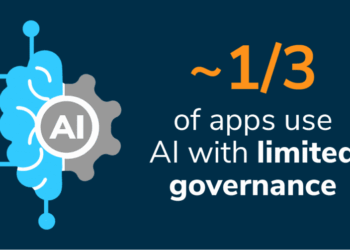


IT teams managing Apple devices face a unique challenge: they’re caught between the promise of AI-powered automation and the reality of enterprise complexity. While vendors rush to slap “AI” labels on everything, smart IT leaders are asking harder questions: Does this actually solve our problems? Will it integrate with our Apple-centric stack? Can we trust it in production?
Key takeaways
As you evaluate AI and automation solutions for your diverse device fleet:
-
Prioritize integration over unification: Focus on tools that work well together, not tools that try to do everything. Jamf’s 400+ integrations prove that best-of-breed can deliver unified workflows without vendor lock-in.
-
Measure platform-specific outcomes: Track metrics that matter for each platform, including user satisfaction, security posture and operational efficiency. Look for vendors who can prove outcomes with independent research, not just marketing claims.
Distinguishing AI hype from practical usefulness
Organizations are increasingly skeptical of vendors who rebrand existing products with “AI” labels rather than delivering measurable automation outcomes.
This much-needed skepticism is a recent development. Forrester’s State of AI Survey, 2024, showed wild enthusiasm for AI combined with low expectations. For instance, a whopping two-thirds of organizations believed that their AI investments could be judged as successful with a less than 50% Return on Investment (ROI).

After the results published, Forrester predicted that 2025 would be the year for a much-needed AI reality check.
And it was, as the realities of AI’s usefulness begin to sink in. According to 2025 Gartner study, data availability and quality are among the top challenges in AI implementation as identified by 34% of leaders from low-maturity and 29% from high-maturity organizations.
The gap between AI fever and practical outcomes has never been wider — and that matters especially when managing Apple devices in enterprise environments.
The problem with mixed-OS environments
Here’s the issue: most enterprise environments aren’t pure Apple shops. You’re likely managing a mix of Windows PCs, Apple devices and mobile platforms — often with a traditional Unified Endpoint Management (UEM) provider handling the bulk of your fleet.
However, management based on Windows requirements with Apple added as an afterthought can’t access all of Apple’s nuanced data points.
The question: should you force Apple devices into your existing UEM, or choose best-of-breed solutions that meet Apple’s unique requirements?
At Jamf, we’ve spent over a decade learning that practical intelligence beats buzzword bingo every time — and that’s especially true when Apple devices are the minority platform in your environment.
While often in the minority, the use of Apple devices in business is rising. According to IDC’s Enterprise Device Management Survey 2023, more than 45% of enterprises now have macOS devices in their environments. Macs comprise around 15% of all PC endpoints at larger organizations.
Those are some sizeable minorities.
The UEM dilemma: One size fits none.
Traditional UEM providers promise the simplicity of managing everything from one console. It’s an appealing pitch, especially for IT teams already stretched thin. But the reality of managing Apple devices through Windows-centric UEM platforms reveals critical gaps that become more pronounced as AI and automation enter the picture.
Where traditional UEMs fall short with Apple
Limited Apple framework support
Most UEMs treat Apple devices as mobile endpoints rather than the sophisticated computing platforms they are.
This means:
AI implementation challenges with UEM
When UEM providers add AI capabilities, they’re typically designed around Windows management patterns:
Real-world implications of managing Apple devices through traditional UEM
According to an internal ROI survey of Jamf customers, organizations managing Apple devices through traditional UEMs report three times longer deployment times and more time spent patching software or maintaining compliance across devices — even when Apple devices represent a smaller percentage of their fleet as compared to Windows.
Best-of-breed matters more in mixed environments
Counterintuitively, the case for Apple-specific management becomes stronger in mixed environments, not weaker. Here’s why:
The minority platform problem
When Apple devices are outnumbered by Windows PCs, they often become second-class citizens in management strategies:
What are the compound effects of poor Apple management?
In mixed environments, poorly managed Apple devices create disproportionate problems:
-
Security vulnerabilities: Unmanaged or poorly managed Apple devices become attack vectors. Public reports from MITRE show macOS-specific threats have increased year over year, making Apple-aware security critical.
Meaningful AI in mixed-platform environments
The AI revolution in endpoint management is creating new opportunities — and new risks — for organizations managing diverse device fleets. The key is in ensuring your AI implementations are meaningful for each platform, not just the largest one.
Platform-aware intelligence
Effective AI in mixed environments recognizes that different platforms have different:
Contextual automation
Smart automation adapts to platform capabilities rather than forcing one-size-fits-all approaches, including:
The integration advantage
Best-of-breed Apple management doesn’t mean isolation. Modern Apple-native platforms integrate seamlessly with other enterprise infrastructure:
Identity integration
-
Single sign-on: Apple devices authenticate through the same identity providers as Windows PCs (Okta, Azure AD, Google Workspace).
Security orchestration
Workflow automation
The Jamf approach: best-of-breed that plays well with others
At Jamf, we’ve learned that being the best Apple management platform means being the best partner to your existing infrastructure — not being a replacement.
Multi-platform security and management
Our Apple-specific data models are trained on extensive Apple device behavioral data to understand normal behavior patterns specific to macOS and iOS. Our approach to AI and automation leverages Apple-native intelligence that recognizes the reality of mixed environments.
Jamf enterprise integrations:
-
As a Microsoft Security Copilot launch partner, Jamf delivers cutting-edge, AI-driven macOS security intelligence that scales capabilities and reduces time-to-resolution for critical incidents.
What is Jamf’s AI Assistant?
AI Assistant, integrated into Jamf Pro and Jamf Protect, answers device management and security questions written in plain language. It allows IT and Security teams to troubleshoot and resolve issues faster, to better understand their environments and to streamline routine management tasks.
AI Assistant is Apple-specific
Jamf’s AI Assistant is purpose-built for Apple environments rather than by retrofitting a generic, Windows-first foundation to serve Apple.
Automated retrieval pipelines
Rather than depending on language models training, we built AI Assistant with automated retrieval pipelines that continuously surface the most current, authoritative knowledge from:
Cross-platform UEMs just can’t prioritize Apple sources the same way.
Explain, investigate, respond
Our new explain, investigate and respond capabilities (demoed at JNUC and rolling out soon) embed Threat Labs expertise directly into AI Assistant, enabling it to rapidly analyze telemetry, clarify alerts and execute human-approved remediation steps.
It’s the next best thing to having a Jamf Threat Labs analyst on your team.
Preserving the Apple user experience
When asked, AI Assistant can contextualize recommendations based on end-user experience. This helps admins understand not just what to configure, but also why it matters to the people using Apple devices.
The dangers of forcing Apple into Windows-centric AI
As UEM providers rush to add AI capabilities, many are making critical mistakes with Apple device management by using Windows-trained algorithms. And AI models that don’t understand Apple device behaviors lead to false positives and missed threats.
Integration limitations
Scalability problems
The path forward: practical intelligence across platforms
The future of enterprise endpoint management isn’t about choosing between unified platforms and best-of-breed solutions — it’s about intelligent orchestration that leverages the strengths of each approach.
For Windows-heavy environments with growing Apple adoption:
For organizations with a significant Apple presence:
Organizations that treat Apple devices as an afterthought in their UEM strategy are accepting unnecessary risk, increased support overhead and user frustration. Those that invest in best-of-breed Apple management alongside their existing infrastructure are seeing measurable improvements across security, efficiency and satisfaction.
At Jamf, we call this approach practical intelligence — automation that works, intelligence you can trust, built specifically for Apple but designed to integrate seamlessly with your existing infrastructure. It’s not about replacing your UEM; it’s about ensuring every platform in your environment gets the specialized attention it deserves.